


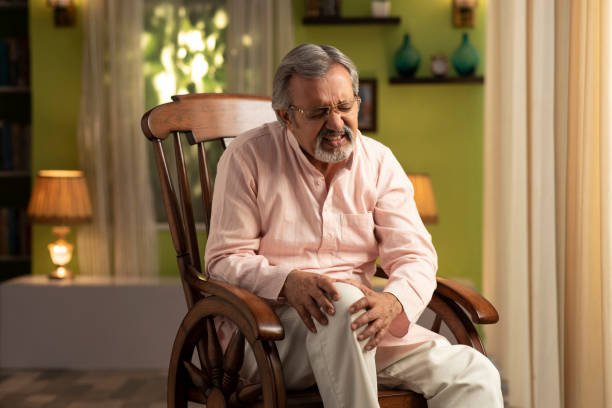
If you have ever felt a dull ache in your knees after a long walk or noticed a “creaking” sound when you stand up from a chair, you are certainly not alone. As an orthopaedic surgeon, I see patients every day who are struggling with knee osteoarthritis. While the name sounds intimidating, it is essentially the “wear and tear” of the protective cartilage that cushions the ends of your bones. When this cartilage thins, the bones begin to rub more closely against one another, leading to pain, swelling, and stiffness.
The most important thing to understand is that a diagnosis of osteoarthritis does not mean you have to stop being active. In fact, movement is often the best medicine. Think of your joints like a door hinge; if you never move it, it gets rusty and stuck. Regular, low-impact exercise—such as swimming, cycling, or walking on flat surfaces—helps keep the joint lubricated and strengthens the muscles around the knee. When your quadriceps and hamstrings are strong, they act as shock absorbers, taking the pressure off the joint itself.
Weight management also plays a massive role in knee health. To put it simply, your knees feel every extra pound you carry. During normal walking, the pressure on your knees is roughly three to six times your body weight. Losing even five to ten pounds can significantly reduce daily pain and slow the progression of the disease. It is one of the few things within your direct control that can change the trajectory of your joint health.
Beyond lifestyle changes, we have several “tools in the shed” to help manage discomfort. Physical therapy is often my first recommendation, as a professional can tailor a program to your specific alignment. Over-the-counter anti-inflammatories or topical gels can provide relief during flare-ups. If those are not enough, we might discuss corticosteroid injections or “gel” shots (hyaluronic acid) to provide temporary cushioning and reduce inflammation.
Surgery, such as a partial or total knee replacement, is typically a last resort. We consider it only when the pain begins to dictate your life—preventing you from sleeping, working, or enjoying your hobbies. Modern joint replacement techniques have come a long way, focusing on rapid recovery and getting you back on your feet as quickly as possible. However, the goal of early management is to keep your original equipment working for as long as possible. If you are starting to feel that “rusty hinge” sensation, do not wait until it is “bone-on-bone.” Early intervention, focusing on strength and lifestyle, is the key to staying mobile and maintaining your independence for years to come.
4 Comments
Hannah Harper D.M.
21/08/2019 at 10:14 AM -Etiam sapien sem magna at vitae pulvinar congue augue egestas pretium neque id viverra suscipit egestas magna porta ratione, mollis risus lectus porta rutrum arcu aenean primis in augue luctus neque purus ipsum neque dolor primis suscipit in magna dignissim, porttitor hendrerit diam. Nunc gravida ultrices felis
Dr. Jonathan Barnes
21/08/2019 at 2:20 PM -Etiam sapien sem magna at vitae pulvinar congue augue egestas pretium neque id viverra suscipit porta ratione, mollis risus lectus porta aliquet lorem purus, quis mollis nisi laoreet vitae
Samantha
21/08/2019 at 2:21 PM -Porta ratione, mollis risus lectus porta rutrum arcu aenean primis in augue luctus neque purus ipsum neque dolor primis libero tempus, tempor posuere ligula varius impedit enim tempor vitae pulvinar congue augue egestas. Praesent aliquet lorem purus, quis mollis nisi laoreet vitae. Mauris nec consequat tortor. Duis fermentum a massa in convallis. Quisque eu ultrices enim, et interdum augue
Dr. Jonathan Barnes
21/08/2019 at 2:21 PM -Etiam sapien sem magna at vitae pulvinar congue augue egestas pretium neque id viverra suscipit egestas magna porta ratione, mollis risus lectus porta rutrum arcu aenean primis in augue auctor integer congue