


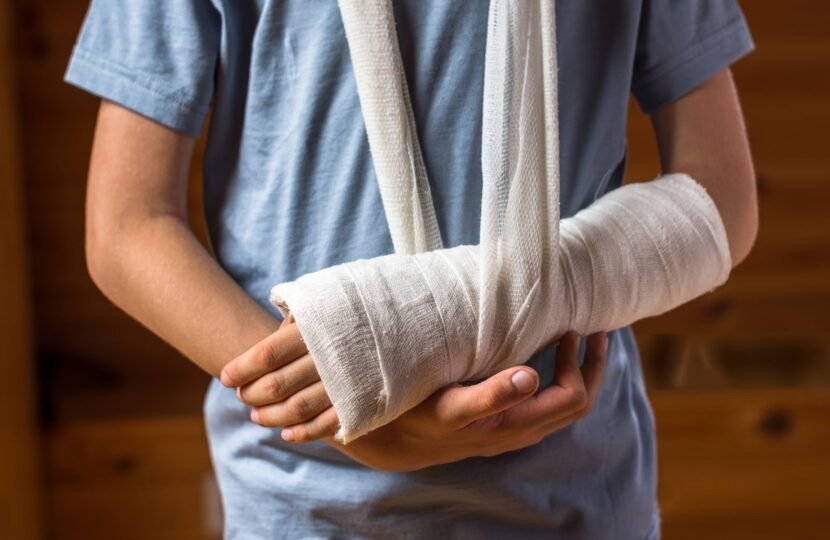
A broken bone rarely gives a warning. It usually happens in a moment—a fall from a bike, a slip on the stairs, a bad landing while playing, or a hard knock during an accident. One second you’re fine, and the next, there’s sharp pain, quick swelling, and sometimes the limb just doesn’t look straight anymore.
As an orthopaedic doctor, I explain it to patients like this: bone is strong, but it has limits. Think of a dry stick versus a fresh green one. A stick can bend a little before it snaps, but too much force, and it breaks. The same happens with bone. Once it breaks, our job is simple—put the pieces back in the right place and give the body time to heal.
How Do We Decide: Plaster or Surgery?
Not every fracture needs an operation, and not every fracture can be fixed with just a plaster cast. We usually look at three things:
-
- Is the bone still lined up properly? If yes, a cast alone may be enough.
- Is the break near or inside a joint? These often need more careful fixing, or the joint may not work smoothly later.
- Is the bone likely to move again? Some fractures shift even inside a cast. These usually need surgery to stay in place.
Plaster (Cast) Treatment
For many fractures—especially in children, or simple breaks in the wrist, arm, or ankle—a plaster cast works very well. It holds the bone still so it can heal naturally. This method avoids surgery and its risks.
The downside is time. Healing can take anywhere from 4 to 12 weeks, depending on age and the bone involved. During this time, nearby joints can get stiff, so we often recommend gentle movement exercises once it’s safe.
Surgery (Operation)
When a fracture is badly out of place, unstable, or affects a joint, surgery is often the better option. This can include:
-
- Plates and screws: Metal plates are attached to the bone with screws to hold it firmly.
- Metal rods: For long bones like the thigh or shin, a rod is placed inside the bone to keep it straight.
- External frames: In severe injuries, pins are placed through the skin and connected to a frame outside the body until healing begins.
Surgery often allows people to move and walk sooner than a cast alone. But like any operation, it carries some risks, such as infection or reaction to anesthesia.
Healing Takes Time
Whether treated with a cast or surgery, bone healing follows its own natural pace—it can’t be rushed. We usually check progress with X-rays to make sure the bone is healing well before allowing full activity again.
One important thing I tell every patient: rushing back to sports or heavy work too soon is one of the most common reasons for setbacks or re-injury. Patience really does pay off.
When to See a Doctor Right Away
Not every fall means a fracture, but some signs need urgent attention:
-
- The limb looks bent or out of shape
- There’s noticeable swelling
- You can’t move it or put weight on it
- There’s numbness or tingling
- The skin is broken near the injury
If you notice any of these, don’t wait—get it checked immediately.
In the end, whether treated with plaster or surgery, the goal is always the same: getting the bone back to its normal shape and strength, so you can return to your daily life without lasting problems.

1 Comment
Dr. Jonathan Barnes
21/08/2019 at 2:23 PM -Etiam sapien sem magna at vitae pulvinar congue augue egestas pretium neque id viverra suscipit egestas magna porta ratione, mollis risus lectus porta rutrum arcu aenean primis in augue auctor integer congue